From toy to tool: rebuilding the excavator
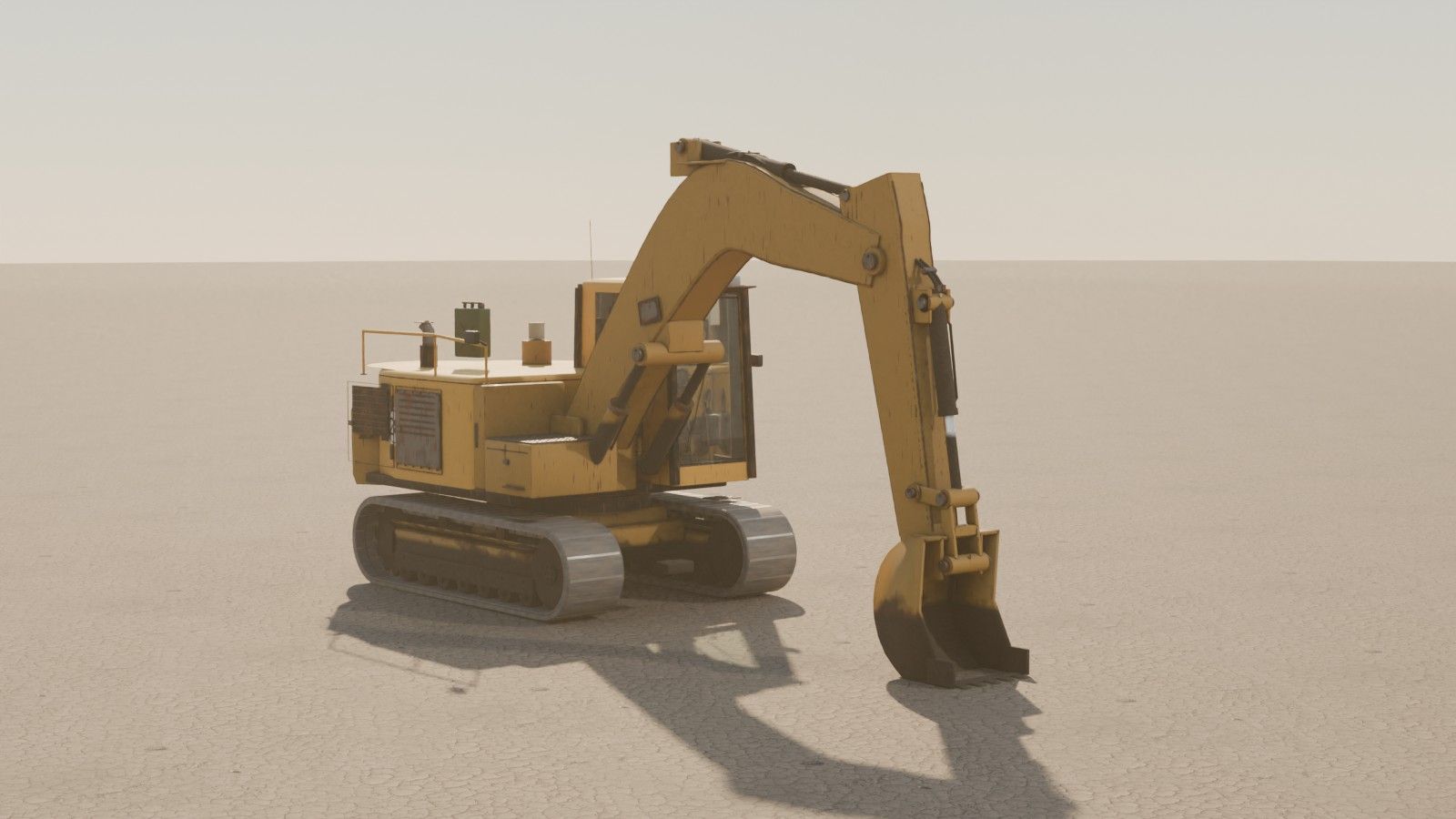
In DustHaul Convoy nobody starts with a vehicle. You build them, and the excavator is one of the heavy ones: slow, expensive, and the best thing you can own when a convoy needs to dig. When we put the first version in front of the team, the verdict was short. It looks like a toy.
It did. This post is about what we changed, in the order we changed it.
Why it read as a toy
We wrote the problems down before touching anything, because “make it look real” is not a task. Four things were doing the damage:
- Fat, rounded, simple forms. The boom and arm were thick tubes with soft ends. Real booms are welded box sections that taper and bend.
- Flat, clean colour. One yellow, no wear, no dirt. A machine that has never worked.
- Too little detail. No pins, no hoses, no grease points. The eye had nothing to believe in.
- Exaggerated proportions. A big cab on a short body, a bucket the size of a car door.
There was also a bug that made it worse. In the reach pose, the bucket came off the arm and hung in the air.
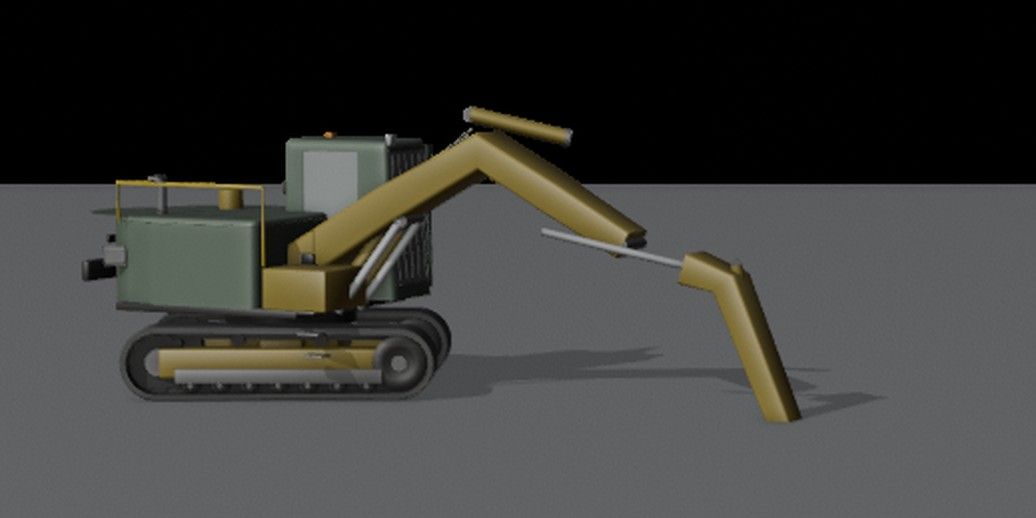
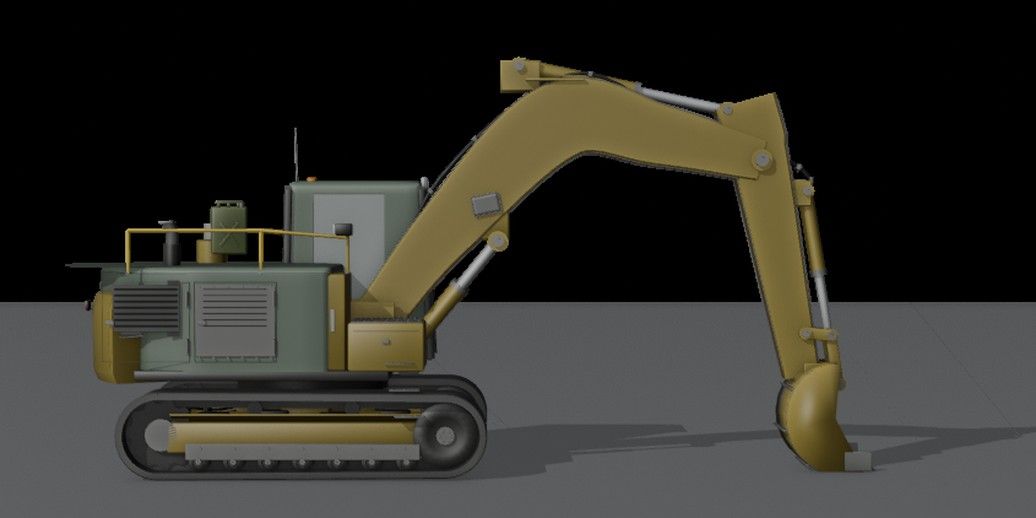
The floating bucket
The vehicle is assembled by script, and each moving part hangs off the one before it: upper house, boom, arm, bucket. Our builder parented these nested pivots without keeping the parent’s inverse transform. In the rest pose that is invisible. As soon as the arm rotated, the bucket’s offset was applied in the wrong space and it drifted off its pin.
The fix was one line in the pivot chain. The same bug was also why the cargo truck’s box door came loose, so one fix repaired both vehicles.
Real proportions first
We stopped designing the excavator and started measuring one. The target is a 14-tonne class machine, and every dimension came from that:
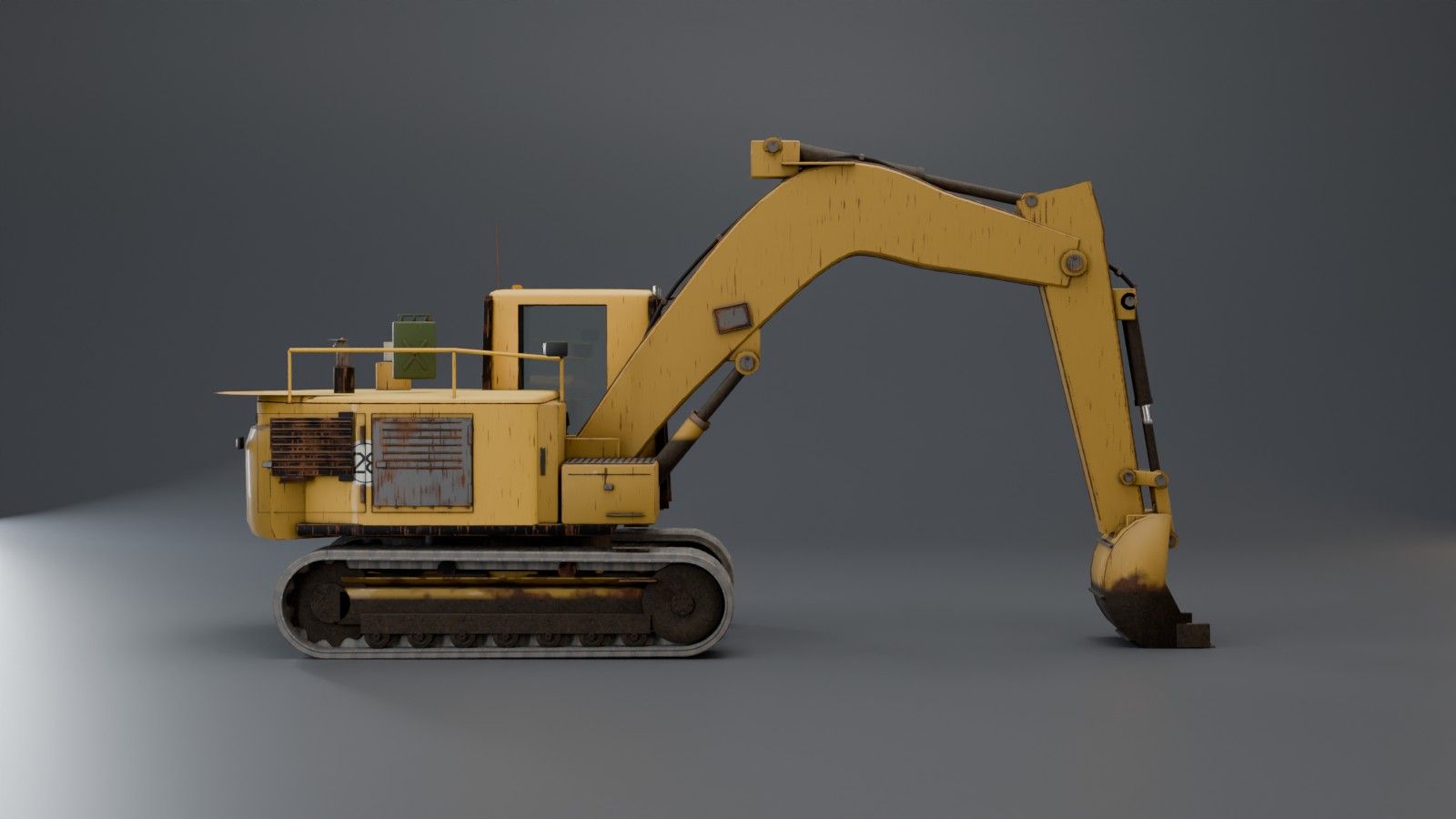
The boom became a banana: a welded plate section whose depth changes along its length, thick at the root and the knee and slimmer between. The arm got the same treatment. The bucket shrank to the size the arm can actually curl.
Mass is not cosmetic for us. In DustHaul every part has a weight, and weight slows you down. When the boom, arm and counterweight are modelled at real size, the parts add up to something close to a real machine, and the driving model gets a sensible number to work with.
The linkage
What makes a digger look like a digger is the bit between the arm and the bucket. We modelled the H-link and the dog bone, with pin bosses at every joint and grease nipples on the pins.
The hydraulics are built in pairs. Each cylinder is two parts, barrel and rod. Each part pivots on its own anchor and is aimed at the other, so the rod slides in and out of the barrel as the arm moves instead of bending through it. The boom has two cylinders, the arm one and the bucket one. Hose bundles run along the boom with clamps where real ones would sit.
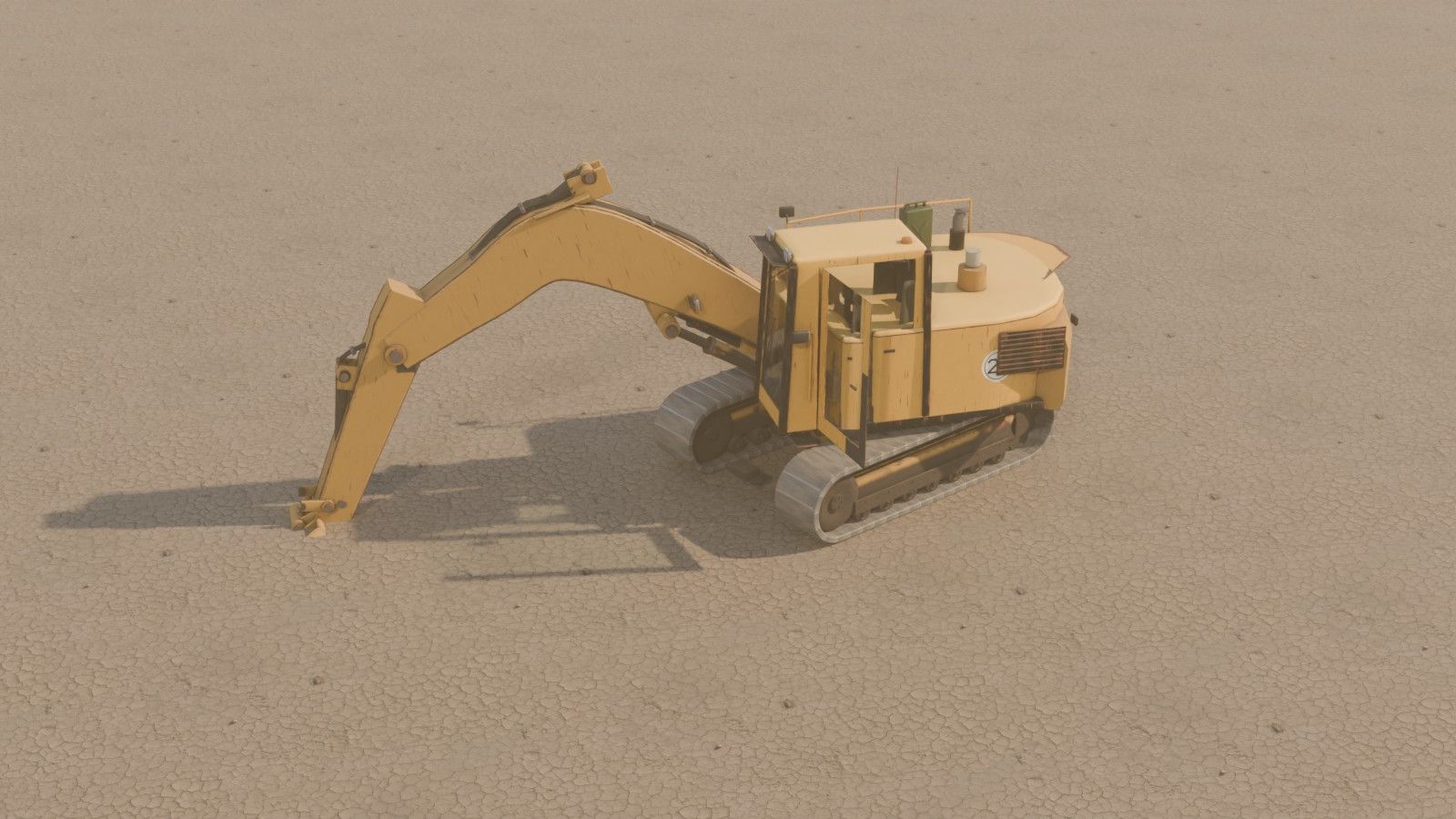
To be honest about it: the bucket linkage animation is still approximate. The dog bone follows the arm and the H-link follows the bucket. At gameplay distance it reads correctly. Up close you can catch it, and we will come back to it.
The body and the cab
Around the house: louvres over the engine bay, service hatches, a curved counterweight, non-slip plate on the walkways, rails and ROPS posts on the cab. Every vehicle in the game now has a modelled interior, and the excavator gets an operator station rather than a car dashboard: two joysticks, travel levers, a monitor and a fire extinguisher. In the game the driver is in the seat and visible through the glass.
Dirt, rust and paint
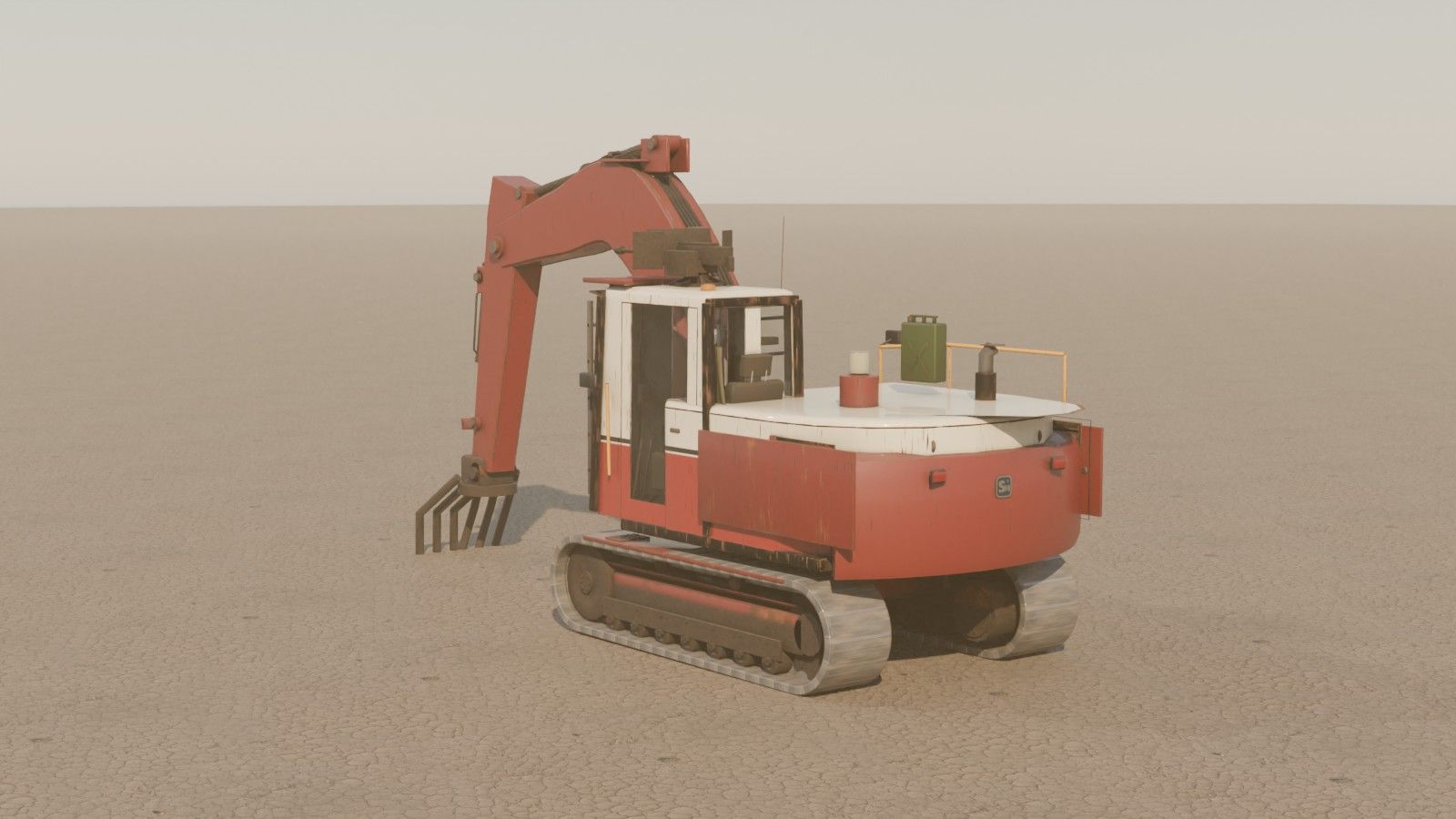
Clean colour was the second-biggest problem, so the bake now writes vertical rust and dirt streaks into the wear masks, the way water carries rust down a panel. On top of that sit three paint jobs. Skins are made entirely in-house, with no third-party content in them.
- Common: Salvage Yellow. The machine as you find it.
- Rare: Demolition Crew. Red and white, worked hard.
- Legendary: Rock Wolf. Grey-blue and steel.
Upgrades that weigh something
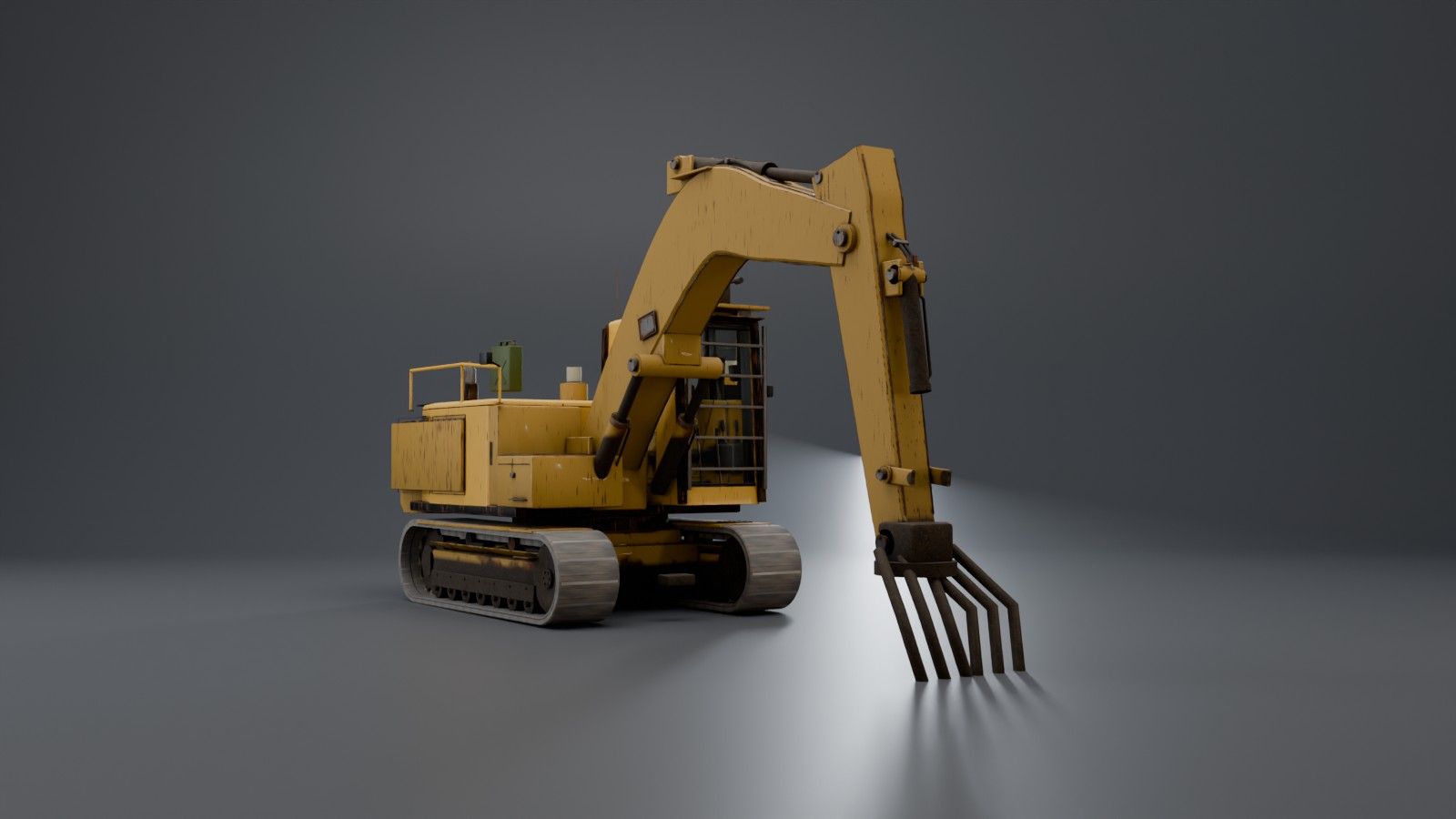
Tier kits bolt onto sockets on the body. Each one has a mass, and the game counts it.
- T2, +440 kg: a cab guard and two track shields.
- T3, +850 kg: a log grapple on the arm tip, armour plates on the house and a roof gun.
A fully kitted excavator is safer and noticeably slower. That trade is the point.
In the engine
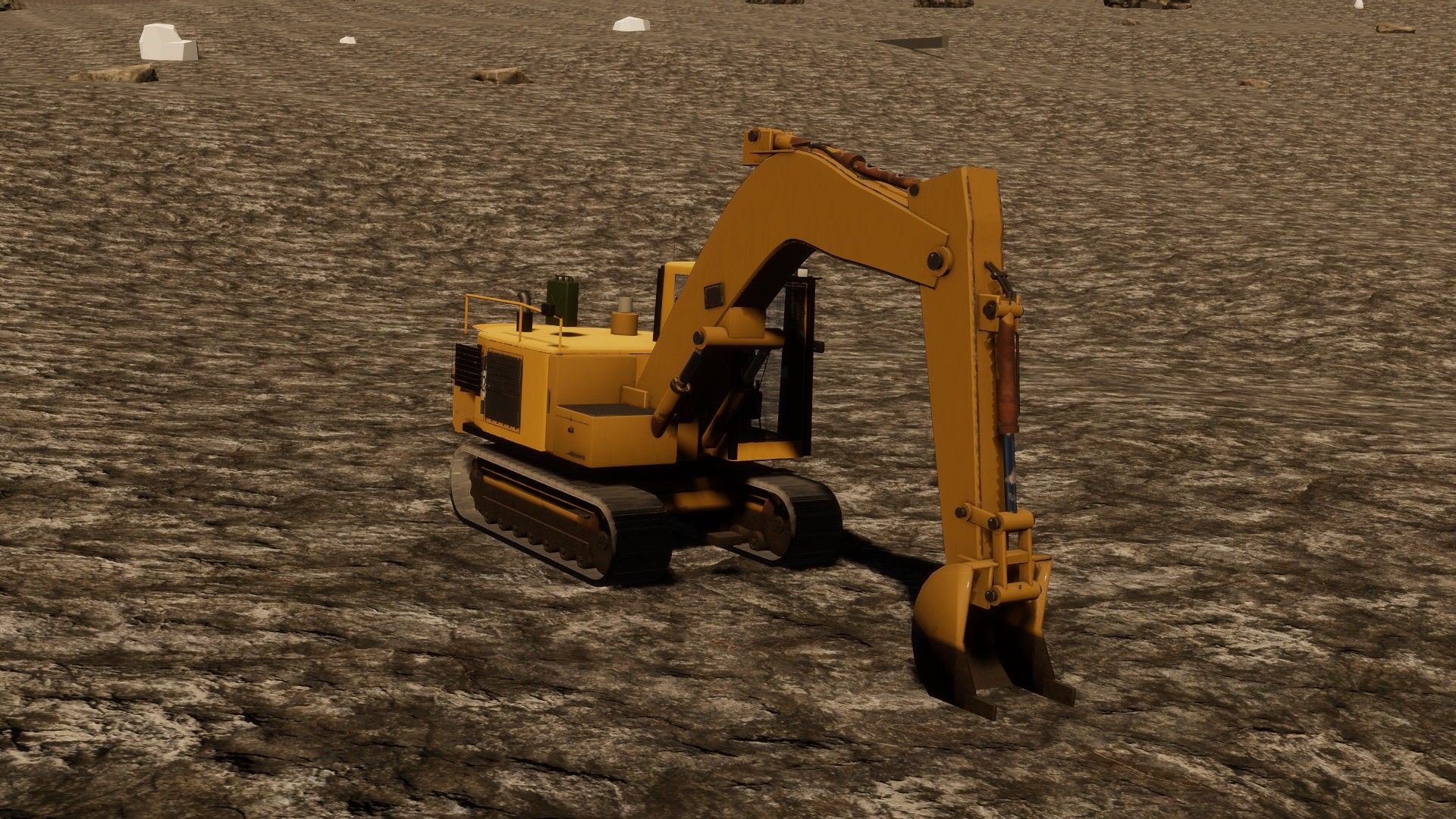
The model, its parts and its moving pivots export to Unity with three LODs and convex colliders. The tracks scroll their texture at 5.9 UV per metre, so the shoes move at ground speed. The importer turns Blender’s axes into Unity’s and bakes each part’s pivot into a second UV channel for the shaders.
What is still rough
- The bucket linkage animation, as above.
- The driver’s-eye view through the front glass washes out in bright daylight. The glass shader is doing its job, but the exposure inside the cab is not.
- The dozer and the crane truck are next in line for the same pass. Their silhouettes were fine. Their surfaces were not.
The excavator is not finished. It does look like it has done a day’s work, though, and that was the goal.
Maien5